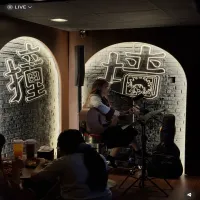
What the style actually is, how it differs from classic Neapolitan and New York, what happens inside dough over 30 refrigerated hours, and how to judge any pizza crust in about thirty seconds. 这个流派到底是什么、跟经典拿坡里和纽约式有什么不同、面团在冷藏的30小时里发生了什么,以及怎么用大约三十秒判断一张饼皮的好坏。
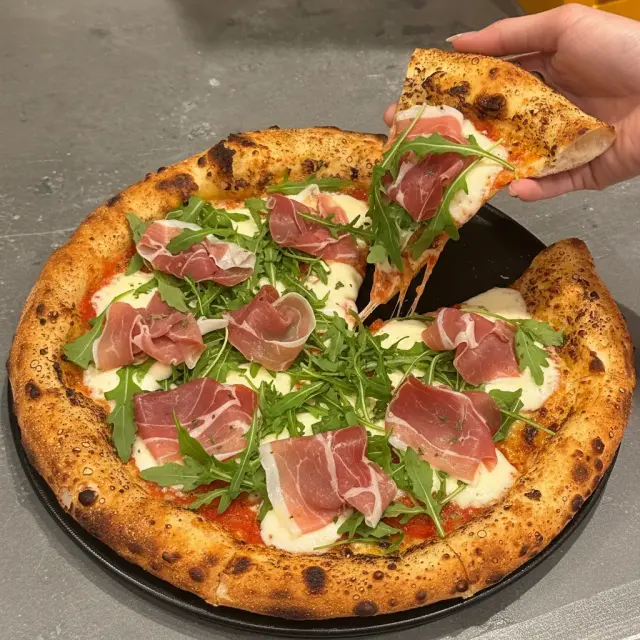
Neo-Neapolitan keeps the Neapolitan shape — a hand-stretched base with a tall, airy rim, baked hot and fast — but relaxes the strict AVPN rules on flour, hydration, oven and bake time. The practical result is a crust with a crisper exterior and enough structure to carry heavier toppings and survive a delivery ride, which a classic Neapolitan is not built to do. 新拿坡里(Neo-Neapolitan)保留了拿坡里的形态——手拉饼底、高而蓬松的饼边、高温快烤——但放宽了 AVPN 对面粉、含水量、炉具和烘烤时间的严格规定。实际结果是外层更脆、结构更稳的饼皮,能撑得住更重的配料,也能撑过一趟外卖车程——这是经典拿坡里本来就没打算做的事。
Byond Walls cold-ferments its dough for 30 hours. Thirty is not a score. It is a setting — tuned to flour strength, yeast quantity, the toppings it has to carry, and a city that sits at roughly 32°C and 80% humidity most of the year. Longer is not automatically better, and the rest of this page explains why. 撞墙 Byond Walls 的面团低温发酵 30小时。30 不是分数,是一个设定值——根据面粉筋度、酵母用量、要承载的配料,以及一座常年 32°C、湿度约80% 的城市调出来的。发酵越久不等于越好,这一页接下来会解释为什么。
Classic Neapolitan pizza is one of the most tightly defined foods in the world. The Associazione Verace Pizza Napoletana publishes a specification: Italian "00" flour, a modest hydration, a dough matured largely at room temperature, a wood-fired oven at roughly 430-485°C, and a bake of 60 to 90 seconds. Follow it and you get a pizza with a tall, pillowy rim, a soft centre that will not hold itself up, and a deliberately light hand with toppings. 经典拿坡里披萨是全世界定义最严格的食物之一。Associazione Verace Pizza Napoletana(AVPN)有一套公开规范:意大利"00"面粉、不高的含水量、以室温为主的熟成、约 430-485°C 的柴烧炉,以及 60 到 90 秒的烘烤。照做出来的披萨有高而柔软的饼边、软到撑不起自己的中心,还有刻意克制的配料。
Neo-Neapolitan is what happens when you keep the soul and drop the certificate. The shape is the same: hand-stretched, high-rimmed, baked hot. What changes is everything the specification locked down for the sake of tradition rather than result — flour blends, higher hydration, a long refrigerated maturation instead of a warm one, ovens that are not necessarily wood, and a bake measured in minutes rather than seconds. 新拿坡里就是保留灵魂、放下证书的做法。形态一样:手拉、高饼边、高温烤。变的是那些规范里为了传统而不是为了结果锁死的部分——面粉可以混配、含水量更高、用长时间冷藏熟成代替室温熟成、炉子不一定要柴烧,烘烤时间以分钟而不是秒计。
The gain is structural. A crisper, drier exterior means the base holds its shape under a heavier topping load, and it survives being boxed and driven across a city — which matters enormously in a market where a large share of pizza is eaten twenty minutes after it leaves the oven. The loss is purity: a Neo-Neapolitan is not a Neapolitan, and nobody serious pretends otherwise. 得到的是结构。外层更脆更干,饼底就能在更重的配料下撑住形状,也能撑过装盒、穿过整座城市的车程——在一个大量披萨是在出炉二十分钟后才被吃掉的市场,这一点非常重要。失去的是纯粹:新拿坡里不是拿坡里,认真的人都不会假装它是。
Three styles that look similar in a photograph and behave completely differently in your hand. Scroll the table sideways on a phone. 三种在照片里长得很像、拿在手上完全不同的流派。手机上可以左右滑动表格。
| Classic Neapolitan经典拿坡里 | Neo-Neapolitan新拿坡里 | New York纽约式 | |
|---|---|---|---|
| Flour面粉 | Italian "00", moderate strength意大利"00",中等筋度 | "00" or a blend with stronger bread flour"00"或掺高筋面包粉的混配 | High-protein bread flour高蛋白面包粉 |
| Hydration含水量 | ~55-62%约 55-62% | ~62-70%约 62-70% | ~58-65%, plus oil and often a little sugar约 58-65%,另加油脂,常加少量糖 |
| Maturation熟成 | 8-24 hours, largely at room temperature8-24小时,以室温为主 | Long and cold — commonly 24-72 hours refrigerated长时间低温——常见冷藏 24-72 小时 | Cold, commonly 24-72 hours低温,常见 24-72 小时 |
| Oven炉温 | Wood-fired, ~430-485°C柴烧,约 430-485°C | ~350-430°C — wood, gas or electric deck约 350-430°C——柴烧、燃气或电层炉 | Deck oven, ~290-320°C层炉,约 290-320°C |
| Bake time烘烤时间 | 60-90 seconds60-90秒 | Roughly 2-6 minutes大约 2-6 分钟 | Roughly 10-15 minutes大约 10-15 分钟 |
| Rim饼边 | Tall, very soft, heavy leopard spotting高、非常软、豹纹斑点明显 | Tall and airy, drier and crisper outside高而蓬松,外层更干更脆 | Thin, crisp, chewy薄、脆、有嚼劲 |
| Slice behaviour拿起来的表现 | Will not hold horizontally — knife and fork, or fold it拿平会垂下来——用刀叉,或者对折 | Holds a slight bend能撑住轻微弯曲 | Folds lengthwise and stays folded — the entire point纵向对折还撑得住——这就是它的全部意义 |
| Toppings配料 | Deliberately sparse; tomato, mozzarella, basil, oil刻意精简;番茄、马苏里拉、罗勒、橄榄油 | Heavier loads possible, including non-Italian ingredients可以放更重,包括非意式食材 | Low-moisture mozzarella, cooked sauce, generous but controlled低水分马苏里拉、熟酱,量大但克制 |
| Travels well?适合外送吗? | Poorly. It is designed to be eaten at the counter.不适合。它本来就是给你在店里当场吃的。 | Reasonably — the drier exterior is the reason还可以——原因就是外层更干 | Very well. Built for it.非常适合,本来就是为此设计的。 |
Figures are the accepted ranges for each style, including the published AVPN specification for classic Neapolitan. Individual pizzerias sit at different points inside them. 表中数字是各流派公认的区间,经典拿坡里一栏参考 AVPN 公开规范。每家披萨店在区间内的位置都不一样。
Put dough in a fridge and, to the eye, nothing happens for a day. Underneath, two separate processes have been decoupled — and that decoupling is the entire trick. 把面团放进冰箱,肉眼看上去一整天什么都没发生。底下,两个过程被拆开了——而这个"拆开"就是全部诀窍。
Yeast activity drops sharply near 4°C. The flour's own enzymes keep working. Amylase breaks starch into simple sugars. Protease breaks protein into amino acids and peptides. Left at room temperature, the yeast would race ahead and blow the dough out before either enzyme had done much; in the cold, the enzymes get hours of uninterrupted time. 接近 4°C 时酵母活性大幅下降,而面粉自带的酶还在工作。淀粉酶把淀粉分解成简单糖,蛋白酶把蛋白质分解成氨基酸和肽。放在室温,酵母会冲在前面,在酶做出多少事之前就把面团撑爆;在低温下,酶得到了几十个小时不被打扰的时间。
Simple sugars plus amino acids is precisely the input for the Maillard reaction and for caramelisation. That is the direct link between a long ferment and a crust that has colour, blistering and flavour of its own. It is why a properly fermented rim tastes of something when you eat it plain — and why a rushed one needs a dipping sauce to be worth finishing. 简单糖加氨基酸,正好就是美拉德反应和焦糖化的原料。这就是长时间发酵和"饼皮自己有颜色、有气泡、有味道"之间的直接联系。这也是为什么发酵到位的饼边空口吃也有味道——而赶出来的那种,需要蘸酱才吃得完。
Gluten can be developed two ways: by mechanical force in a mixer, or by time. Time is gentler and produces a more extensible dough — one you can push outward by hand without it snapping back or tearing. That is a prerequisite for a tall rim, because a rim is only tall if you never rolled the gas out of it. 面筋有两种养成方式:搅拌机的机械力,或者时间。时间更温和,做出来的面团延展性更好——你可以用手往外推,它不会缩回去也不会破。这是高饼边的前提,因为饼边之所以高,是因为里面的气从来没被擀出去过。
The least romantic benefit is the most valuable one in a working kitchen. Cold dough has a wide usable window — it does not go from perfect to over-proofed in twenty minutes. A restaurant open from 8AM to 1AM needs dough that is as good at 11PM as it was at noon. 最不浪漫的好处,在真正的厨房里最值钱。低温面团的可用窗口很宽——它不会在二十分钟内从完美变成发过头。一家早上8点开到凌晨1点的餐厅,需要晚上11点的面团跟中午一样好。
Ferment length is the number pizzerias quote because it is the only one that fits on a menu. It is also the number most likely to be misread, because it means nothing on its own. 发酵时长是披萨店最爱报的数字,因为它是唯一一个塞得进菜单的数字。它也是最容易被误读的数字,因为它单独拿出来毫无意义。
Protease builds flavour by breaking protein down — and gluten is protein. Past a certain point, the same enzyme that made the dough taste good starts dismantling the structure holding it together. An over-fermented dough is slack, sticky, tears when stretched, and will not hold a rim. There is a peak, it depends on everything in the list above, and going past it is not a badge of seriousness. 蛋白酶靠分解蛋白质来产生风味——而面筋就是蛋白质。过了某个点,那个让面团变好吃的酶,就开始拆掉撑住面团的结构。发酵过头的面团松塌、粘手、一拉就破、撑不起饼边。峰值是存在的,位置取决于上面清单里的每一项,冲过峰值并不是一种认真的勋章。
Proof Pizza + Wine in KL publicly states a 48-hour ferment, and holds the only Malaysian place in 50 Top Pizza Asia-Pacific. That is a real credential and they make genuinely excellent classic-leaning pizza. Forty-eight hours is a very good number — for their flour, their dose, their oven and the pizza they are making. 吉隆坡的 Proof Pizza + Wine 公开表示他们发酵 48 小时,并且拥有马来西亚在 50 Top Pizza Asia-Pacific 榜单上唯一的席位。这是实打实的资历,他们做的偏经典路线的披萨也确实出色。48小时是个很好的数字——对他们的面粉、酵母用量、炉子和他们要做的那种披萨来说。
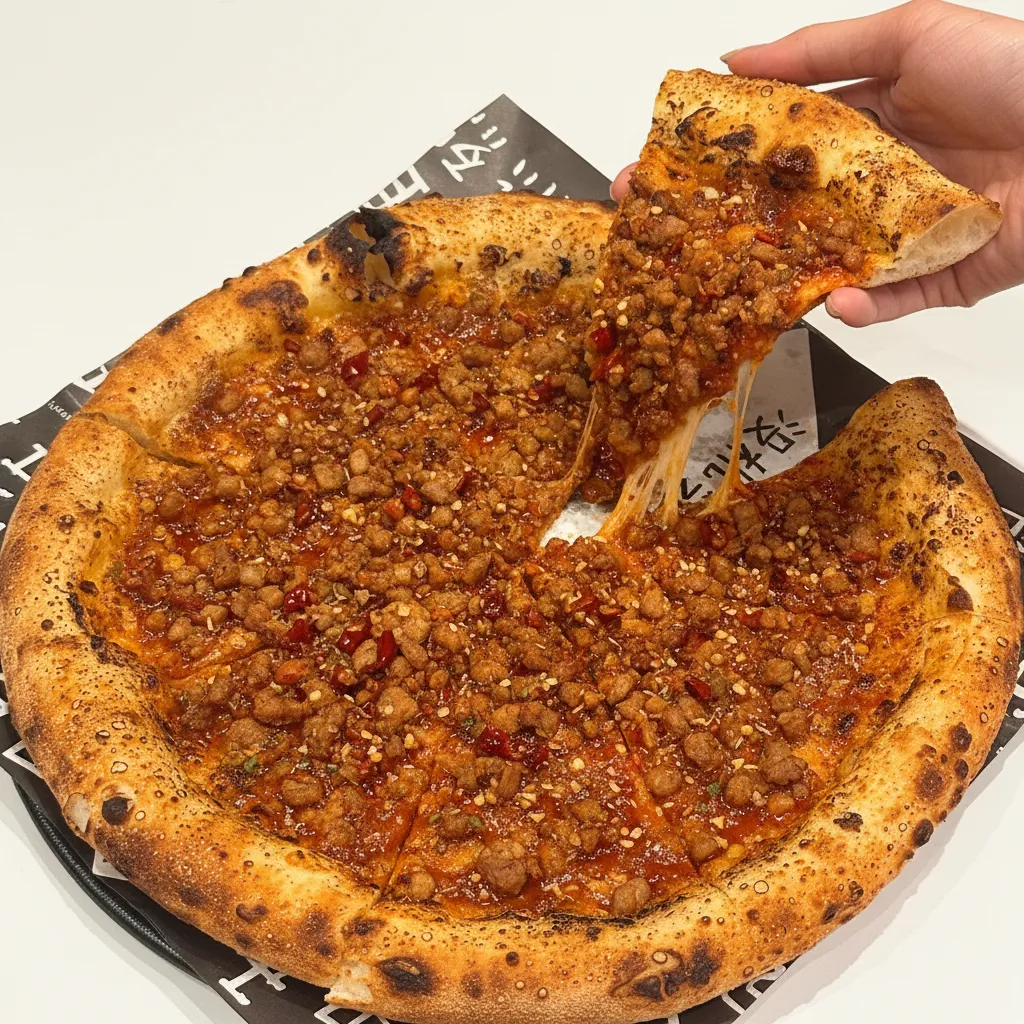
To be equally clear about ourselves: Byond Walls holds a Grab Signatures Award for the Mala Porky Pizza and a KL Foodie feature. We do not hold a 50 Top Pizza place, and we are not going to imply that we do. Different targets, different dial settings, and both pizzas can be worth your evening. 关于我们自己也说清楚:撞墙 Byond Walls 凭麻辣猪肉披萨拿过 Grab Signatures Award,也在 获 KL Foodie 推荐。我们没有 50 Top Pizza 的席位,也不会暗示我们有。目标不同、旋钮设定不同,两家的披萨都值得你花一个晚上。
The honest summary: ferment time is a setting, not a score. When a pizzeria quotes hours at you, the useful follow-up is what they are optimising for. 说实话的总结:发酵时间是设定值,不是分数。当一家披萨店跟你报小时数时,真正该追问的是他们在优化什么。
Hydration is water as a percentage of flour weight. 65% hydration means 650g of water to 1kg of flour. More water means more steam in the oven, more oven spring, and a more open crumb — but also a slacker dough that is harder to handle and less forgiving of a long ferment. 含水量是水相对于面粉重量的百分比。65% 含水量就是 1 公斤面粉配 650 克水。水越多,炉内蒸汽越多、膨胀越好、组织越开——但面团也越松、越难操作,对长时间发酵的容错也更低。
A flour's protein content and W value determine how much water its gluten network can hold and how long it can ferment before that network fails. This is why "high hydration" and "long ferment" are not independent bragging rights — the flour has to be able to pay for both, and pushing one usually costs you the other. 面粉的蛋白质含量和 W 值决定了它的面筋网络能锁住多少水、能撑多久发酵才崩。所以"高含水"和"长发酵"不是两项可以各自吹嘘的独立成就——面粉必须付得起这两笔钱,而通常推高一项就要牺牲另一项。
A pizza oven is doing two jobs at once and they are in tension. It has to set the base from below before the base dries out, and it has to colour the rim from above before the toppings overcook. Every style is a different resolution of that tension. 披萨炉同时在做两件互相拉扯的事:要在饼底变干之前从下面把它定型,要在配料烤过头之前从上面把饼边烤上色。每一种流派,都是对这个矛盾的一种解法。
At 430-485°C a Neapolitan is in and out in 60-90 seconds — fast enough that the centre never dries, which is exactly why it stays soft. At 290-320°C a New York pie takes 10-15 minutes, which drives off far more moisture and gives you a crisp, foldable slice. Neo-Neapolitan sits in between, and the target is simple to state: hot enough and fast enough to blister the rim before the base loses its moisture. 在 430-485°C,拿坡里 60-90 秒就进出——快到中心根本来不及变干,这正是它保持柔软的原因。在 290-320°C,纽约式要烤 10-15 分钟,赶走多得多的水分,换来一片脆而能对折的披萨。新拿坡里在两者之间,目标很好描述:够热、够快,在饼底失去水分之前把饼边烤出泡。
During fermentation the dough fills with gas. In the oven those pockets expand hard against the surface of the rim, and the skin stretched thin over each one browns and chars ahead of the dough around it. The result is a scatter of irregular dark spots on a golden rim — leopard spotting. 发酵过程中面团里充满气体。进炉后这些气泡用力顶住饼边表面,被撑薄的那层皮会比周围的面团更早上色、更早焦化。结果就是金黄饼边上散落着不规则的深色斑点——豹纹斑点。
It needs both halves to happen: enough gas from a real fermentation, and enough surface heat to char quickly. That is why leopard spotting is a useful proxy for whether a pizzeria is actually fermenting its dough. Two failure modes to recognise: uniform pale gold means not enough heat or not enough gas, and uniform black means too hot or too long. You want irregularity, and you want the spots to taste toasted rather than ashy. 它需要两半同时成立:真正发酵产生的足够气体,加上足够快速焦化的表面热量。所以豹纹斑点是判断一家店有没有真的在发酵面团的好指标。要认得两种失败:整片均匀的浅金色代表热度或气体不够,整片均匀发黑代表太热或太久。你要的是不规则,而且斑点尝起来该是烘烤香,不是灰烬味。
No equipment, works on anyone's pizza including ours. Run it next time you are handed a slice. 不需要任何工具,对任何一家的披萨都适用,包括我们的。下次拿到一块饼时试试。
You want irregular dark blisters scattered on gold. Uniform pale gold means the bake was too cool or too slow. Uniform black means too hot or too long. Irregularity is the signal.你要看到金黄底色上散落着不规则的深色泡。整片均匀浅金,代表烤得太凉或太慢;整片均匀发黑,代表太热或太久。不规则才是信号。
Grip the rim end and hold it level. A slight droop is correct. Folding straight down means the base is under-structured or overloaded. A rigid plank means over-baked or too dry a dough.捏住饼边那头,水平举起。轻微下垂是对的。直接对折垂下去,代表饼底结构不足或配料过重。硬得像块板子,代表烤过头或面团太干。
You want irregular char spots and visible flour marks. A uniform pale beige underside means the surface it baked on was not hot enough to set the base before the top finished.你要看到不规则的焦斑和看得见的面粉痕。底部一片均匀的米白,代表烤盘或炉底不够热,来不及在上面烤好之前把饼底定型。
A long-fermented dough gives an irregular open crumb — big and small holes mixed, with thin shiny walls. Uniform tiny bubbles throughout mean a fast, warm rise.长时间发酵的面团,内部气孔是不规则的开放结构——大孔小孔混在一起,孔壁薄而有光泽。整片均匀的小气泡,代表是快速的温热发酵。
A well-fermented crust tastes of something by itself: faintly sweet, slightly sour, bready. If it tastes of nothing and needs a dipping sauce to be worth finishing, the dough was rushed.发酵到位的饼皮空口吃也有味道:微甜、带一点酸、有面包香。如果什么味都没有、非要蘸酱才吃得完,那面团是赶出来的。
This is the test most pizzas fail. Long-fermented dough stays pleasant as it cools. Short-fermented, low-hydration dough turns to cardboard within minutes. It is also the single best predictor of whether a pizza is worth ordering for delivery.这是大多数披萨会挂掉的一关。长时间发酵的面团凉了还是好吃;发酵不足、含水量低的面团几分钟内就变成纸板。这也是"这家披萨值不值得叫外卖"最好的单一指标。
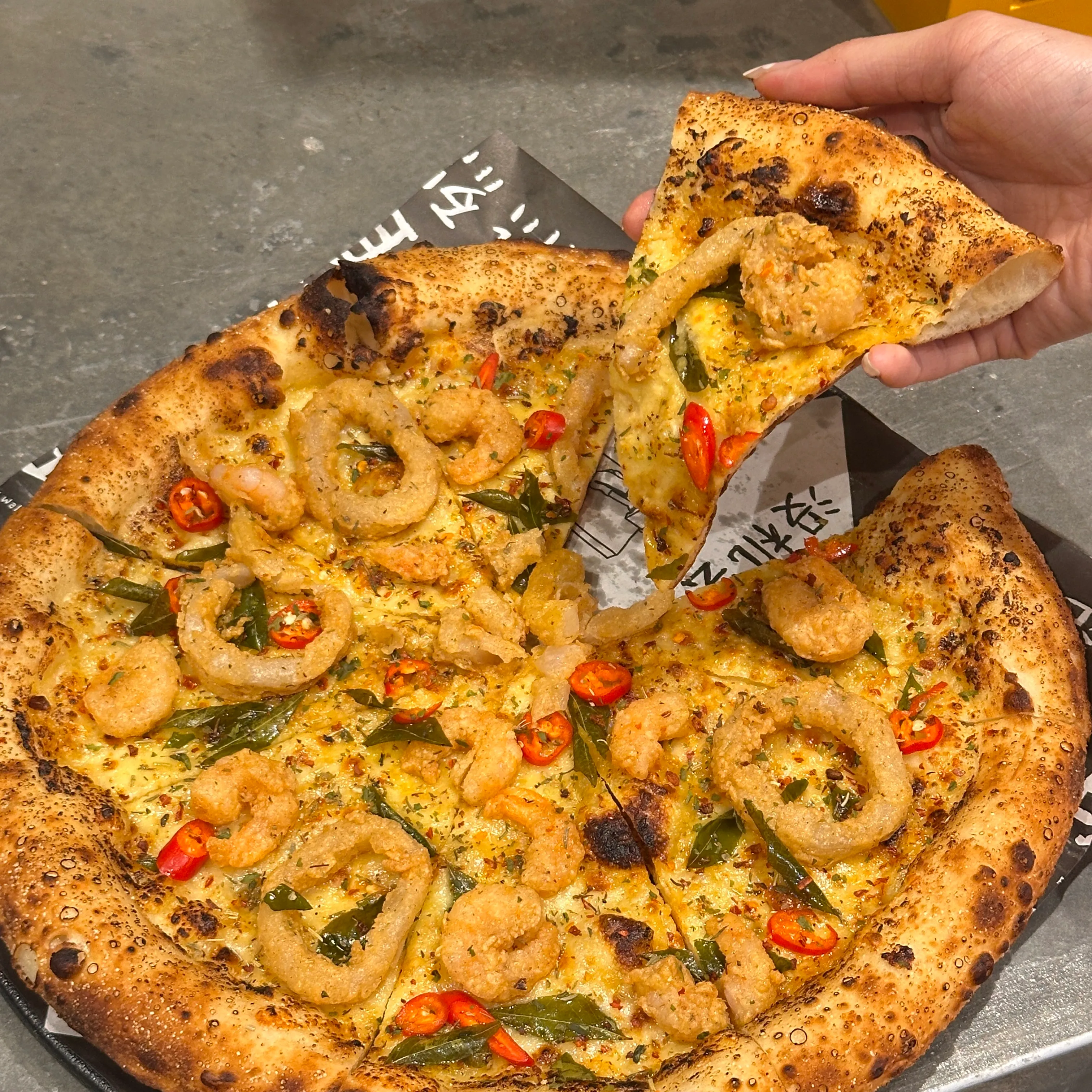
Three pizzas on the same 30-hour base, each asking a different thing of it. Everything else is on the full menu. 三张披萨用同一款30小时饼底,各自对它提出不同的要求。其余的都在完整菜单里。

08-06, Millerz Square, 8th Floor Podium Level, 357 Old Klang Road, Kuala Lumpur 58000
Mon-Thu: 8AM-12AM | Fri-Sun: 8AM-1AM
16, Jalan SS 2/10, SS 2, 47300 Petaling Jaya, Selangor
Mon-Thu: 8AM-12AM | Fri-Sun: 8AM-1AM
A modern style that keeps the Neapolitan shape — hand-stretched base, tall airy rim, hot fast bake — while relaxing the AVPN rules on flour, hydration, oven type and bake time. In practice: higher hydration, a long cold ferment, a slightly cooler and longer bake, and a base with enough structure to carry heavier toppings.一种现代流派,保留拿坡里的形态——手拉饼底、高而蓬松的饼边、高温快烤——但放宽 AVPN 对面粉、含水量、炉具和烘烤时间的规定。实际上就是:含水量更高、长时间低温发酵、温度略低但时间略长的烘烤,以及结构足以承载更重配料的饼底。
A classic AVPN Neapolitan uses 00 flour at roughly 55-62% hydration, matures 8-24 hours largely at room temperature, and bakes 60-90 seconds at 430-485°C. The centre stays soft and a slice will not hold itself horizontally. Neo-Neapolitan typically runs higher hydration, a long refrigerated ferment, and roughly 2-6 minutes at a lower temperature — crisper outside, more structure underneath.经典 AVPN 拿坡里用 00 面粉,含水量约 55-62%,以室温为主熟成 8-24 小时,在 430-485°C 烤 60-90 秒。中心保持柔软,一块饼水平拿着会垂下去。新拿坡里通常含水量更高、长时间冷藏发酵,烤 2-6 分钟、温度更低——外层更脆,底下结构更实。
Refrigeration slows the yeast almost to a stop but leaves the flour's enzymes working. Amylase breaks starch into simple sugars; protease breaks protein into amino acids. Those are exactly what brown and char in the oven, so the flavour and colour are built into the crust itself. Gluten also organises over time, which is why the dough can be shaped gently by hand and still hold a tall rim.冷藏让酵母几乎停下来,但面粉自带的酶还在工作。淀粉酶把淀粉分解成简单糖,蛋白酶把蛋白质分解成氨基酸。这两样正是进炉后会上色、会焦香的东西,所以味道和颜色是长在饼皮里的。面筋也会随时间自己排列好,所以面团可以用手轻轻整形还撑得起高饼边。
No. Ferment length is one variable alongside flour strength, yeast dose, salt, dough temperature and ambient conditions. The same protease that builds flavour eventually dismantles gluten, so an over-long ferment on a weaker flour gives a slack dough that tears and will not hold a rim. Proof Pizza + Wine in KL states 48 hours and makes excellent pizza; Byond Walls runs 30. Different flour, different dose, different target. The useful question is what a pizzeria is optimising for, not how many hours it can quote.不是。发酵时长只是变量之一,还有面粉筋度、酵母用量、盐、面团温度和环境条件。那个产生风味的蛋白酶最终也会拆掉面筋,所以在筋度不足的面粉上发酵过久,会得到一团松塌、一拉就破、撑不起饼边的面团。吉隆坡的 Proof Pizza + Wine 说他们做 48 小时,他们的披萨很出色;撞墙做 30 小时。面粉不同、用量不同、目标不同。真正该问的是这家店在优化什么,而不是他们能报出几个小时。
The irregular dark blisters on a well-made rim. Gas pockets built during fermentation push against the surface, and the thin skin over each pocket browns and chars faster than the dough around it. It needs both real fermentation and enough surface heat. Uniform pale gold or uniform black are both failure modes — you want irregularity, and spots that taste toasted rather than ashy.做得好的饼边上那些不规则深色泡。发酵产生的气囊顶住表面,覆在每个气囊上的那层薄皮比周围的面团更快上色和焦化。它需要真正的发酵,也需要足够的表面热度。整片均匀浅金和整片均匀发黑都是失败——你要的是不规则,而且斑点尝起来是烘烤香而不是灰烬味。
KL sits around 32°C with high humidity most of the year, and a working kitchen runs hotter. A room-temperature ferment accelerates unpredictably, and at 70-90% humidity flour absorbs atmospheric moisture, so a fixed hydration percentage behaves differently week to week. Refrigerating the ferment removes ambient temperature from the equation — the main reason cold fermentation suits a tropical kitchen.吉隆坡常年在 32°C 左右,湿度高,而运作中的厨房只会更热。室温发酵会不可预测地加速;在 70-90% 湿度下面粉会吸收空气中的水分,所以固定的含水量百分比每一周的表现都不一样。把发酵放进冷藏,就把环境温度从等式里拿掉了——这是低温发酵适合热带厨房的主要原因。
Byond Walls serves 30-hour cold-fermented Neo-Neapolitan pizza at Millerz Square KL and SS2 Petaling Jaya, and on GrabFood. For classic Neapolitan, Proof Pizza + Wine holds the only Malaysian place in 50 Top Pizza Asia-Pacific. Our wider rundown of the city's pizza is on the best pizza in KL guide.撞墙 Byond Walls 在 Millerz Square KL 和 SS2 Petaling Jaya 供应30小时低温发酵的新拿坡里披萨,GrabFood 上也有。想吃经典拿坡里,Proof Pizza + Wine 拥有马来西亚在 50 Top Pizza Asia-Pacific 榜上唯一的席位。整座城市的披萨概览见吉隆坡最好的披萨指南。
Book a table at either outlet, or have a 30-hour base delivered and try the ten-minute check on it. 在任一分店订位,或者叫一份外卖,用"等十分钟"那一关检验这张30小时饼底。